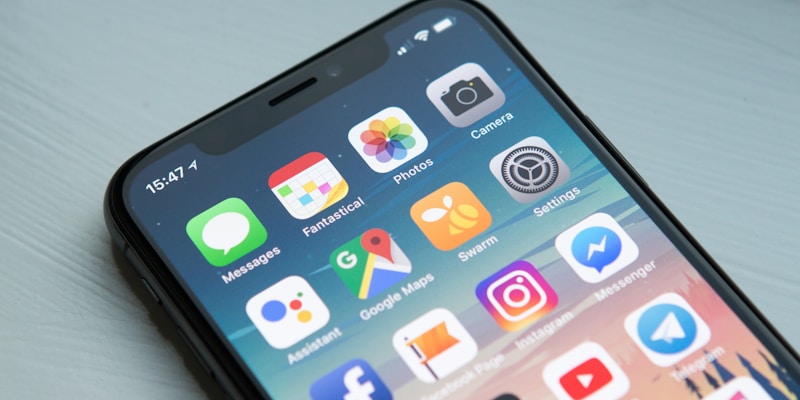
Six months ago, my phone told me I was spending an average of seven hours and forty-two minutes on my screen every single day. Not work-related screen time, by the way. I mean mindless scrolling, opening apps out of habit, checking notifications that did not need checking, and falling into rabbit holes of content I did not even care about. When I saw that number, I felt genuinely embarrassed. That is almost a third of my entire waking life staring at a glowing rectangle.
Today, my average screen time sits between three and a half to four hours per day, and most of that is intentional and productive. Cutting my screen time in half did not happen overnight, and it was not easy. But it was one of the most rewarding changes I have made for my mental health, sleep quality, and overall focus. Here is exactly how I did it.
The Wake-Up Call
The catalyst for my screen time reduction was not some grand realization. It was a series of small moments that stacked up. I noticed I was reading fewer books. I caught myself reaching for my phone during conversations with friends. I would set my alarm at night and end up scrolling for forty minutes before actually sleeping. One Sunday afternoon, I looked up from my phone and realized four hours had passed and I had accomplished absolutely nothing. I felt drained but had nothing to show for it.
That was the turning point. I decided to track my usage for one full week without changing any habits, just to see the real damage. Seven hours and forty-two minutes was the average. Some days it hit nine hours. Seeing that data in black and white made it impossible to ignore.
The Apps I Used to Take Control
I knew I needed tools to help me because willpower alone was not going to cut it. Here is what worked for me.
Digital Wellbeing (Android) / Screen Time (iPhone)
Both operating systems have built-in tools for tracking and limiting screen time. I set daily app timers for my worst offenders: Instagram, Twitter, and YouTube. I started with a one-hour combined limit and gradually reduced it. The key feature is the grayscale mode. When my timer runs out, my phone switches to grayscale, which makes the screen incredibly boring to look at. It sounds silly, but it works brilliantly.
Forest App
This app became my best friend. Forest lets you plant a virtual tree when you want to focus. If you leave the app to check social media, your tree dies. There is something surprisingly powerful about not wanting to kill a little digital tree. I used this during work hours and in the evenings when I wanted to be present at home. Over time, I built a virtual forest that gave me a visual representation of my focused time.
One Sec
This was a game changer. One Sec adds a breathing exercise every time you try to open a distracting app. You have to take a deep breath and wait a few seconds before the app opens. It sounds minimal, but that tiny friction is often enough to make me ask myself, do I actually need to open this right now? About seventy percent of the time, the answer was no, and I would just close my phone entirely.
The Specific Strategies That Stuck
Beyond apps, I changed several behaviors that made the biggest difference in the long run.
I Removed Social Media From My Home Screen
Out of sight, out of mind. I moved Instagram, Twitter, and TikTok into a folder on the second page of my phone. I also turned off every single notification except text messages and phone calls. The result was that I stopped reflexively opening these apps dozens of times a day. I still checked them, but only when I intentionally decided to, not because a notification dragged me in.
I Created Phone-Free Zones
I made my bedroom and my dining table phone-free zones. The bedroom rule was the hardest but also the most impactful. I bought a cheap alarm clock so I would not need my phone to wake up. That one change added roughly thirty to forty minutes of extra sleep per night because I was no longer scrolling before bed. The dining table rule meant mealtimes became more mindful and gave me a chance to actually enjoy my food and have real conversations.
I Replaced the Habit
I realized that most of my screen time was not driven by a genuine need. It was driven by boredom, anxiety, or habit. When I felt the urge to pick up my phone, I started asking myself what I was actually feeling. Usually, it was boredom. So I started keeping a book or my Kindle within arm's reach instead. I also started keeping a small notebook for quick journaling or jotting down ideas. Replacing the habit rather than just trying to eliminate it was far more effective.
I Set a Digital Sunset
Every night at nine o'clock, I put my phone on the charger in the kitchen and switch it to Do Not Disturb mode. This simple boundary completely transformed my evenings. I started reading more, having longer conversations with my partner, and actually falling asleep faster. The first week was uncomfortable. By the third week, I was looking forward to my phone-free evenings.
The Challenges I Faced
I want to be honest about this because reducing screen time sounds simple but it is genuinely difficult in a world designed to keep you hooked.
The first challenge was FOMO. I genuinely feared missing out on important conversations, news, or events. The truth is, I missed almost nothing that mattered. If something truly important happened, I heard about it through friends or family anyway. The vast majority of what fills our feeds is forgettable within hours.
The second challenge was social pressure. Several friends assumed I was being dramatic or pretentious. Some took it personally when I did not respond to messages immediately. I had to learn to set boundaries and explain that I was not ignoring them, I was just not glued to my phone anymore. Most people respected it once I explained my reasoning.
The third challenge was boredom. Real, uncomfortable boredom. Sitting with nothing to do and no screen to distract me was unfamiliar and honestly a little scary at first. But that boredom turned out to be where creativity lives. Some of my best ideas for this blog came during moments when I was just sitting with my thoughts instead of consuming someone else's content.
The Results After Six Months
The changes I experienced were significant and measurable.
- Sleep quality improved dramatically. I fall asleep within ten minutes now instead of tossing and turning for an hour. I wake up feeling more rested.
- My focus and concentration increased. I can read for two hours straight without the urge to check my phone. This was impossible before.
- My anxiety levels dropped. I stopped comparing myself to curated versions of other people's lives. I feel more content with my own life.
- I read 23 books in four months. Before reducing screen time, I was lucky to finish two books a year.
- My relationships improved. I am more present, more engaged, and more attentive in conversations.
- I created more than I consumed. Instead of passively scrolling, I started writing, building, and making things.
You do not need to delete every app and go live in the woods. You just need to be intentional about where your attention goes. Small changes compound into massive results over time.
Where I Am Now
I want to clarify that I am not anti-technology. My phone and computer are essential tools for my work and my life. The difference now is that I am in control of them instead of the other way around. I use my phone as a tool, not a pacifier. I choose when to engage with social media instead of letting it choose for me. That shift in mindset has been the most valuable part of this entire journey.
If you are reading this and feeling that familiar guilt about your own screen time, know that you can change. Start with one strategy. Just one. Maybe it is removing social media from your home screen. Maybe it is setting a digital sunset. Maybe it is just tracking your usage for a week without any judgment. Whatever you choose, start small and be patient with yourself. The results are absolutely worth the effort.