I used to think I was just bad at focusing. I would sit down to work on something important and within ten minutes my mind would wander to my phone, to email, to random thoughts about what to have for dinner. I would catch myself, pull my attention back, and then lose it again five minutes later. It was exhausting and it was ruining my productivity. What I eventually realized is that focus is not some talent you are born with. It is a skill you build and an environment you create. Here are the techniques that actually worked for me.
The Pomodoro Technique Changed Everything
The single most effective focus technique I have ever used is the Pomodoro method. The concept is simple. Work for twenty-five minutes with complete focus. Then take a five-minute break. After four cycles, take a longer fifteen to thirty minute break. That is it. I resisted this for months because it sounded too simple, but the results speak for themselves.
The reason it works so well for me is that twenty-five minutes feels manageable. When I look at a three-hour project, my brain resists starting. When I tell myself I just need to focus for twenty-five minutes, the barrier to starting is almost zero. And once I am in the flow, I often want to keep going past the timer. But even on days when I do not want to keep going, those twenty-five minute sprints still add up. Four Pomodoros is almost two hours of focused work, which is more than most people get in an entire day.
I use a simple timer on my phone. When the timer starts, I put my phone face down in another room. When the break comes, I stand up, stretch, get water, and come back. The breaks are not optional. They are part of the system. The regular breaks prevent the mental fatigue that makes you want to quit after an hour.
I Put My Phone in Another Room
This one tip probably improved my focus more than any other single change. Research from the University of Texas at Austin found that even having your phone visible on your desk, even if it is turned off, reduces your available cognitive capacity. Your brain spends energy resisting the temptation to check it. Removing the phone entirely eliminates that drain.
I bought a small charging stand and put it in my bedroom. When I start a work block, my phone goes there. Face down, volume on silent. The first few days were uncomfortable. I kept reaching for my pocket out of habit. After about a week, the urge faded. After a month, I could not believe I had ever tried to work with my phone within arm's reach. The freedom of not being constantly available is worth more than I expected.
If you cannot put your phone in another room because you need it for work calls or two-factor authentication, at minimum turn off all notifications except calls. Every ping, buzz, and banner is a focus interrupter. You do not need to respond to a text within thirty seconds. The person will survive.
I Design My Environment for Focus
Your environment shapes your behavior more than your willpower does. If your desk is cluttered, you will be distracted. If your browser has twenty tabs open, you will be pulled in twenty directions. If there is a television visible from your workspace, you will think about watching it. I learned to treat my environment as a tool for focus rather than just a place where I happen to sit.
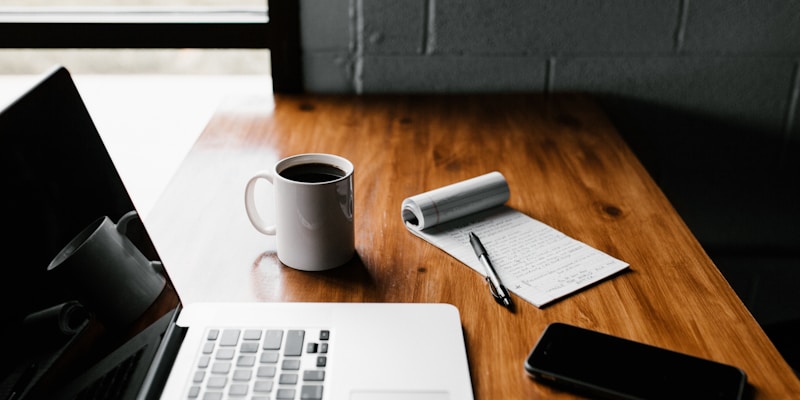
I cleared everything off my desk that I do not use daily. That means no stacks of paper, no random objects, no junk mail. Just my computer, a notebook, a pen, and my water bottle. I close every browser tab that is not related to my current task. I use a single browser window with only what I need. The visual simplicity translates to mental simplicity.
I also invested in good lighting. A desk lamp with warm, bright light makes a bigger difference than I expected. Working in dim or harsh fluorescent light creates eye strain and fatigue that kills focus. Natural light from a window is the best option when available. I rearranged my desk to face the window and it transformed my work experience. If you want more details about workspace optimization, I wrote about my full setup in How to Create a Productive Workspace.
I Batch My Communication
Email and messaging apps are focus killers. Not because they are inherently bad, but because checking them reactively fragments your attention. I used to keep my email open all day and respond to messages as they arrived. This meant I was never fully focused on anything because part of my brain was always monitoring for new messages.
Now I check email and messages at three specific times during the day. Once in the morning around 9:30 AM. Once after lunch around 1:00 PM. Once at the end of the workday around 4:30 PM. Outside those windows, email is closed. Completely closed. Not minimized. Closed. My colleagues know that if something is truly urgent, they can call me. In two years, I have never missed anything critical by checking email three times a day instead of thirty.
This was terrifying to implement at first. I felt like I was abandoning people. The reality is that almost nothing in email is truly time-sensitive. Most responses can wait two or three hours. And the productivity gain from uninterrupted work blocks is enormous. I get more done in focused three-hour blocks than I used to in eight scattered hours.
I Use the Two-Minute Rule
If a task takes less than two minutes, I do it immediately rather than adding it to my to-do list. This simple rule from David Allen's Getting Things Done method prevents small tasks from accumulating into an overwhelming pile. Responding to a quick email, filing a document, confirming an appointment, filling out a short form, all of these get handled right away.
The beauty of this rule is that it prevents the mental load of tracking dozens of tiny tasks. Each one individually seems insignificant, but collectively they create a background hum of anxiety. When I clear them immediately, my mind feels lighter and more available for the deep work that matters. It also prevents the awkward situation of forgetting a small commitment that turns into a bigger problem.
I Protect My Peak Hours
Everyone has times of day when their focus and energy are naturally higher. For me, it is between 9:00 AM and 12:00 PM. I learned to fiercely protect those hours for my most demanding work. No meetings. No email. No administrative tasks. Just deep, focused work on whatever is most important.
I tell my team and collaborators that I am unavailable during those hours. I block the time on my calendar as "Focused Work" so anyone trying to schedule a meeting can see it is taken. This single habit transformed my output. Before protecting peak hours, I was doing my hardest work at 3:00 PM when my energy was lowest and then doing easy tasks at 10:00 AM when my brain was sharpest. That is completely backwards.
Know your peak hours and guard them. If you are not sure when they are, track your energy and focus for a week. Notice when you feel sharpest and when you feel the dreaded afternoon slump. Then rearrange your schedule to match. Deep work during peak hours, administrative work during low hours.
I Take Real Breaks
This was a hard lesson for me. I used to think taking a break meant picking up my phone and scrolling through social media. That is not a break. That is a different kind of stimulation that leaves your brain just as tired as before. A real break means stepping away from screens entirely.
During my Pomodoro breaks and lunch hour, I go outside for a short walk. I stretch. I refill my water. I chat with someone face to face. I look out the window at something far away to rest my eyes. These activities actually restore mental energy. Scrolling through Instagram does not. The difference is noticeable. On days when I take real breaks, I can sustain focus for much longer than on days when I power through without proper rest.
Walking breaks are particularly powerful. There is solid research showing that walking increases creative thinking by up to sixty percent. Many of my best ideas have come during a fifteen-minute walk around the block between work blocks. It is not wasted time. It is an investment in the quality of your thinking.
I Use a Focus Playlist
I discovered that certain types of music help me focus. Specifically, instrumental music with no lyrics. I rotate between classical music, lo-fi beats, and ambient soundscapes depending on my mood. Lyrics are distracting because your brain automatically tries to process language, competing with the language processing you need for writing or reading.
I created three playlists for different types of work. One for creative work that is more upbeat and inspiring. One for analytical work that is calm and repetitive. One for administrative work that is neutral and unobtrusive. Having these playlists ready means I do not waste time searching for something to listen to. I just press play and enter focus mode. The music becomes a Pavlovian trigger that tells my brain it is time to concentrate.
If music does not work for you, many people focus better with ambient noise. Apps that simulate coffee shop sounds, rain, or white noise can be very effective. The key is finding what audio environment helps your brain settle into deep work.
I Practice Single-Tasking
Multitasking is a myth. Your brain does not actually do two things at once. It switches between them rapidly, losing focus and efficiency with every switch. I used to pride myself on multitasking. I would write a report while answering emails while listening to a call. What I was actually doing was doing three things poorly and slowly instead of one thing well and quickly.
Now I do one thing at a time. When I am writing, I am only writing. When I am in a meeting, I am only in the meeting. When I am eating lunch, I am only eating lunch. This sounds almost absurdly simple, but practicing single-tasking is one of the most challenging and rewarding focus habits. My work quality improved. My speed improved. And surprisingly, my stress decreased because I was no longer mentally juggling multiple threads.
I End My Workday with a Shutdown Ritual
Every day at the end of my work time, I do a quick shutdown ritual. I review what I accomplished. I write down the top priority for tomorrow. I close all my work tabs and applications. I tidy my desk. Then I say out loud, "Work is done." This might sound silly, but it creates a clear boundary between work time and personal time.
Without this ritual, I found myself mentally working all evening. I would be watching a movie with my partner but thinking about an unfinished task. The shutdown ritual gives my brain permission to stop. It knows that tomorrow's priority is written down and ready. It knows the workspace is clean. It knows the workday has a defined end. This improved my evenings and paradoxically improved my next-day focus because I was well-rested.
"Focus is not about forcing your brain to concentrate. It is about removing the obstacles to concentration and creating conditions where focus happens naturally."
Putting It All Together
You do not need to implement all of these at once. Pick the two or three that address your biggest focus challenges. For most people, the highest-impact changes are putting the phone in another room, batching email, and using the Pomodoro technique. Start there. Build consistency. Then layer on the other strategies.
I also recommend pairing these focus techniques with a strong morning routine and a weekly planning system like the ones I described in 10 Morning Habits That Changed My Life and How I Organize My Week Every Sunday. Focus during the day is much easier when you start with intention and plan your priorities in advance. The three systems work together to create a framework for a productive, focused, and less stressful life.
Focus is a muscle. The more you train it, the stronger it gets. Start small, be consistent, and be patient with yourself. The scattered, distracted version of you is not permanent. The focused version is waiting on the other side of a few simple habit changes.